Overview
IndustrialClaw is an industrial AI Agent platform built on OpenClaw. It runs AI Agents directly on edge devices, helping your Agents run their tasks reliably.
Local First
Data and models run on the device

RBAC
Each role gets its own data and tool access

Sandbox / OverlayFS
Limits what an Agent can do to production
Audit
Every action is traceable
The platform provides four core capabilities:
-
Local First | Data stays on the device
AI Agents, models, and data run directly on the local device, reducing dependence on the cloud.
-
RBAC | Roles decide what each user can do
Access to data, tools, and features can be restricted by user or role.
-
Sandbox / OverlayFS | Lower operational risk
Limits what an AI Agent can change, so a mistake does not directly affect the production environment.
-
Audit | Every action is recorded
Which actions an AI Agent took and which tools it used can be traced and queried.
Core principles
Task-focused Agents
Keep each Agent focused on a defined job rather than building open-ended automation.
In IndustrialClaw, an Agent's package is its capability boundary: a Task can use only the Skills installed for that Agent, so it cannot reach beyond what the Agent was designed to do. When an Agent's responsibility, capabilities, and available tools are all clearly scoped, it is easier to validate, deploy, monitor, and troubleshoot.
Built for the industrial edge
Run Agents where the data and the work are.
Industrial sites often face limited compute, unreliable networks, data that must not leave the site, and equipment that has to keep running, so the platform treats the edge as its primary environment from the start. With the model and Skills on the device itself, an Agent can still finish its work on site even when the device cannot reach an external network.
Human-controlled autonomy
Let Agents automate the work they should handle, while people keep control of important decisions.
Administrators create every account, approve every package—including any container permissions a Skill asks for—and decide which Agents each User may operate. Confirmation and review steps belong in the workflow wherever an action carries operational risk.
Managed Agent operations
Treat deployed Agents as managed software assets, not one-off prototypes.
Every import, update, Task start and stop, permission change, and settings change is recorded in Audit. Every run keeps its Log, its Session, and the files it produced. A Task is complete only when the platform has verified those files exist—not when the model says so.
Use cases
IndustrialClaw is an application and management layer between AI Agents and existing industrial systems. Agents reach operational data through Skills the team writes and the platform scans, perform approved work, and stay observable to the people responsible for the line.
IndustrialClaw lets Agents work with these systems through defined tools, APIs, and interfaces, bringing AI reasoning and task execution into workflows that already exist.
Start with work that has a clear input and a result a person can check:
- summarising equipment alarms for a shift handover;
- finding the right SOP for a maintenance case;
- preparing an AOI anomaly for quality review;
- turning inspection data into a report;
- organising operational information for a human decision.
For the first use case, pick one repeated job with representative sample data and an output somebody can verify. Run a normal case, a case with information missing, and a failure case before the Agent sees operational data. Where an action could change equipment state or production parameters, the existing approval and safety controls stay exactly where they are.
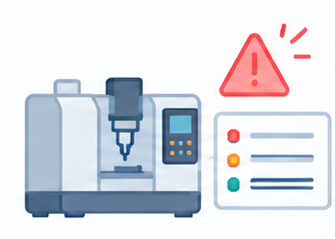
Equipment Alerts
Organize and summarize equipment alarms for shift handover.
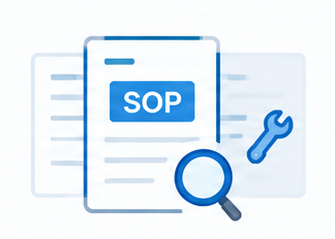
SOP Retrieval
Find the right SOP based on maintenance conditions.
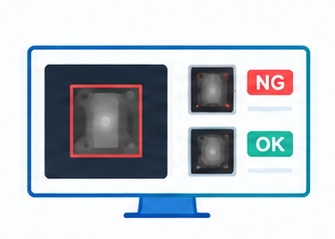
AOI Exceptions
Organize abnormal inspection results for quality team review.
Inspection Reports
Convert inspection data into structured reports.
Decision Support
Consolidate shop-floor information to help people make better decisions.